
Top Load vs Bottom Load vs Bottleless Water Dispenser
Compare top load, bottom load, and bottleless water dispensers so you can choose the right setup for convenience, refilling, and daily use.
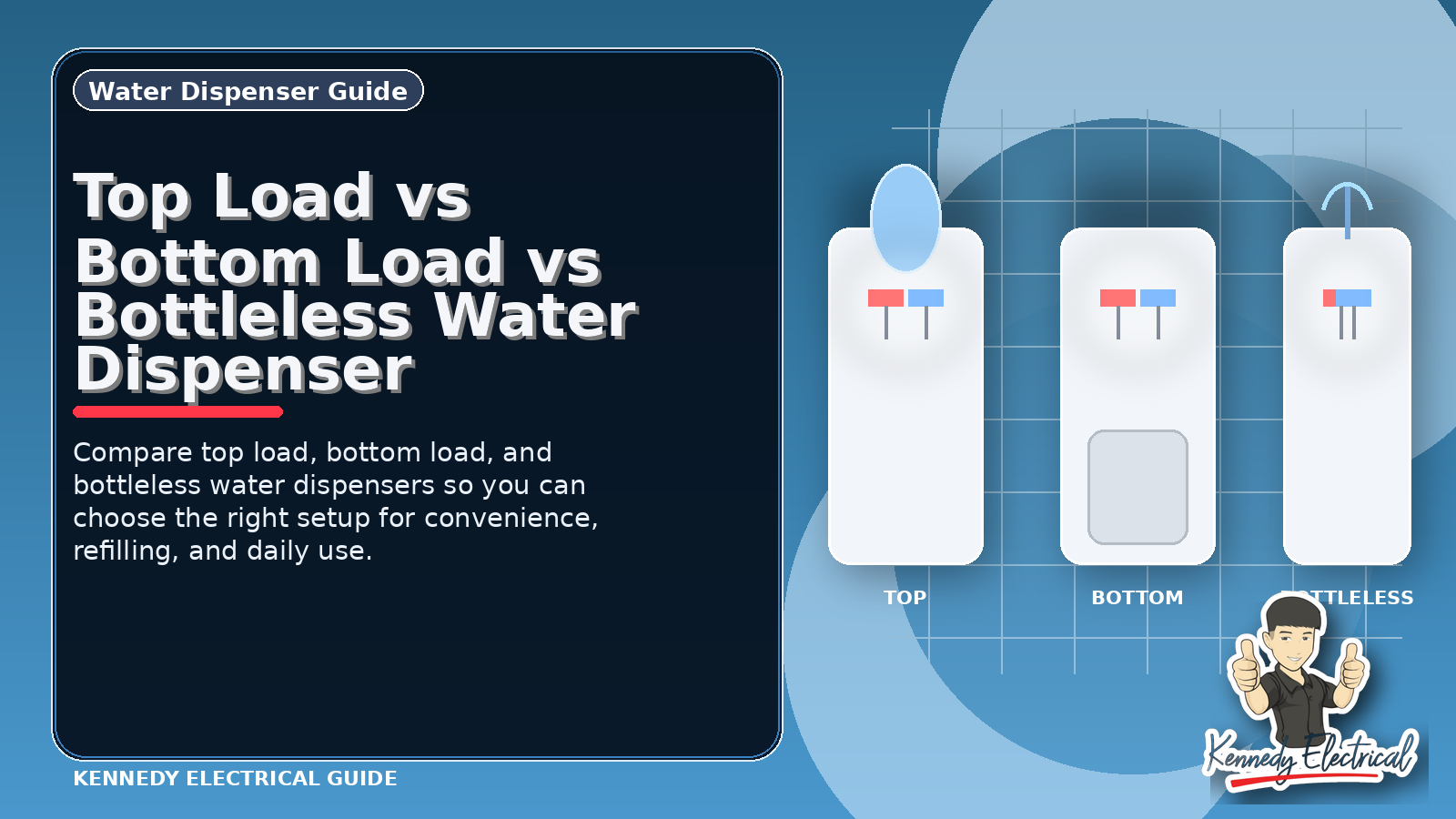
The right water dispenser depends on how you want to manage water supply
Water dispenser choice is not only about hot or cold water. It is also about how you want to handle refilling, bottle lifting, installation, and the day-to-day convenience of the system. Some buyers prefer the familiarity of bottled units, while others want a cleaner look or a plumbed-in solution that reduces the hassle of replacing water jugs.
Quick comparison
| Feature | Bottled options | Bottleless option |
|---|---|---|
| Top load dispenser | Classic bottled setup with visible bottle on top | Bottleless connects directly to the water line instead |
| Bottom load dispenser | Bottle is hidden below and is easier to replace than top load | Bottleless removes bottle handling altogether |
| Refilling style | Bottled systems still need replacement jugs | Bottleless offers continuous supply from the water connection |
| Best for | Homes or sites that prefer bottled delivery simplicity | Users who want less lifting and less ongoing bottle handling |
When bottom load makes the most sense
Bottom-load dispensers are attractive for buyers who want bottled water convenience without lifting a heavy bottle up onto the top of the unit. Because the bottle sits in a lower enclosed compartment, they often feel cleaner in appearance and easier to manage day to day. Bottleless units go one step further by removing the bottle entirely, but they need a suitable water-line setup.
Best fit by buyer type
| Feature | Buyer situation | Often the better direction |
|---|---|---|
| Budget-conscious bottled setup | Top load can still be a practical classic option | Only if lifting the bottle is not a concern |
| Want bottled water without heavy lifting | Bottom load is often easier to live with | The hidden bottle also gives a neater look |
| Want continuous supply and less bottle handling | Bottleless becomes more attractive | Best when the site can support direct connection |
| Tighter placement or cleaner appearance | Bottom load or bottleless often feels more modern | Top load is more visually obvious because the bottle remains exposed |
What buyers often forget before they decide
The right dispenser is about more than how the unit looks in a showroom. Think about who will change the water supply, whether the unit is for home or office use, how often it will be used, and whether a direct water connection is realistic. A setup that feels easy to maintain will usually give better long-term satisfaction than one that only looks sleek on day one.
Frequently asked questions
Is bottom load better than top load?
For many buyers, yes, because it avoids lifting the bottle onto the top of the dispenser. But top load can still be a practical lower-complexity option.
What is the biggest advantage of bottleless?
Bottleless units remove the need to replace water bottles and can provide a more continuous day-to-day water supply.
Is top load outdated?
No. It is still a familiar and practical option for users who are comfortable managing bottled supply.
Should I choose only by appearance?
It is better to think about refilling, bottle lifting, and whether direct plumbing is realistic for the location.
What is the biggest mistake buyers make?
Choosing a dispenser style without thinking through how the water supply will actually be managed every week.
Need help choosing the right water dispenser type?
Tell us whether the unit is for home or office use, whether bottled supply is acceptable, and whether you want to avoid lifting heavy bottles. Kennedy Electrical can help you narrow down the more suitable dispenser type before you buy.
Get water dispenser advice