
Inverter vs Non-Inverter Air Conditioner
Compare inverter and non-inverter air conditioners by cooling pattern, noise, electricity usage, budget, and daily use before you buy.
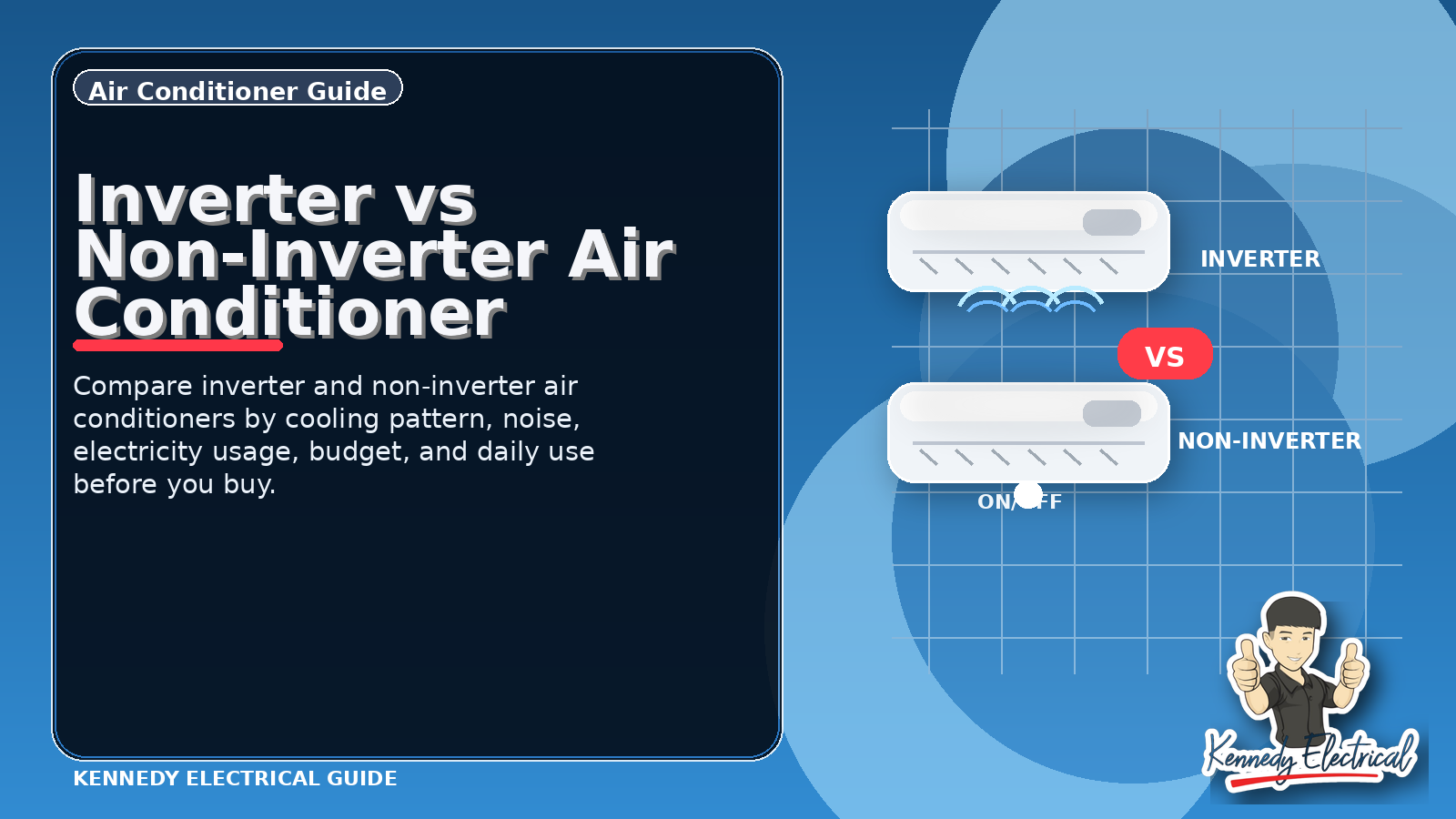
What is the real difference?
An inverter air conditioner varies compressor speed to hold the room closer to your target temperature, while a non-inverter model usually switches on and off more noticeably. In practical use, inverter models often feel smoother and quieter once the room is cool, while non-inverter models can still be sensible for lighter use and tighter budgets.
Quick comparison
| Feature | Inverter | Non-Inverter |
|---|---|---|
| Cooling pattern | Adjusts output more gradually to maintain comfort | More obvious stop-start cycling in many situations |
| Noise during normal use | Often quieter after the room reaches temperature | Can be more noticeable when restarting |
| Best usage pattern | Usually stronger for longer daily use | Can still work well for shorter or occasional use |
| Upfront budget | Usually higher initial cost | Usually lower initial cost |
When inverter usually makes the most sense
Choose inverter if the room is used every night, if you value quieter operation, or if you want more stable comfort during long running hours. Bedrooms, living rooms, and work-from-home spaces are often where buyers notice the difference most clearly.
When non-inverter can still be a smart buy
Non-inverter air conditioners are not automatically a bad choice. They can still suit guest rooms, lighter daytime use, or buyers who want a lower upfront price and do not expect the unit to run for many hours every day. The right choice depends on usage pattern, not just marketing labels.
Which buyer tends to prefer which option
| Feature | Buyer situation | Usually stronger fit |
|---|---|---|
| Daily overnight bedroom use | Inverter is often preferred for steadier comfort | Non-inverter may feel less refined for long nightly use |
| Occasional or guest-room use | Inverter is still fine if budget allows | Non-inverter can be practical if usage is light |
| Noise-sensitive users | Often preferred because operation can feel calmer | May be acceptable, but restarts can be more noticeable |
| Budget-first decision | Worth considering for longer-term value | Often attractive for lower purchase cost |
Questions to ask before you choose
How many hours will the unit run each day? Is the room mainly for sleeping, relaxing, or occasional use? Does the room get hot afternoon sun? Are you more concerned about upfront price, ongoing comfort, or long-term running efficiency? These questions usually lead to a better decision than comparing labels alone.
Frequently asked questions
Does inverter always mean cheaper electricity bills?
Not in every single usage pattern, but inverter models are often more attractive when the air conditioner runs for longer periods and comfort stability matters.
Is non-inverter still worth buying?
Yes. It can still be a reasonable option for lighter or less frequent use, especially when upfront budget matters most.
Is inverter better for bedrooms?
Often yes, because buyers usually appreciate steadier cooling and quieter operation in sleeping areas.
Can I decide based only on price?
It is better to look at how often the room is used. A lower purchase price is not always the best long-term fit.
Does room size still matter?
Absolutely. After choosing inverter or non-inverter, proper sizing still matters for comfort and performance.
Need help choosing between inverter and non-inverter?
Tell us your room size, how many hours you use the air conditioner, and whether the space gets strong afternoon sun. Kennedy Electrical can guide you to the more sensible option.
Get aircond advice