
How to Choose the Right Cooker Hood Suction Power
Use kitchen size, cooktop width, and cooking style to choose the right cooker hood suction power before you buy.
Start with how much air needs to be moved
A cooker hood should not be chosen by looks alone. The right suction power depends on the size of the kitchen, whether the hood is mounted against a wall or above an island, how often you fry or stir-fry, and whether you cook on gas, induction, or ceramic hobs. A hood that is too weak may struggle with smoke, steam, grease, and odours, while an oversized model can be louder and may be unnecessary for lighter cooking habits. The strongest buying approach is to calculate a realistic minimum and then choose a model that gives some headroom.
Three practical formulas that shoppers can use
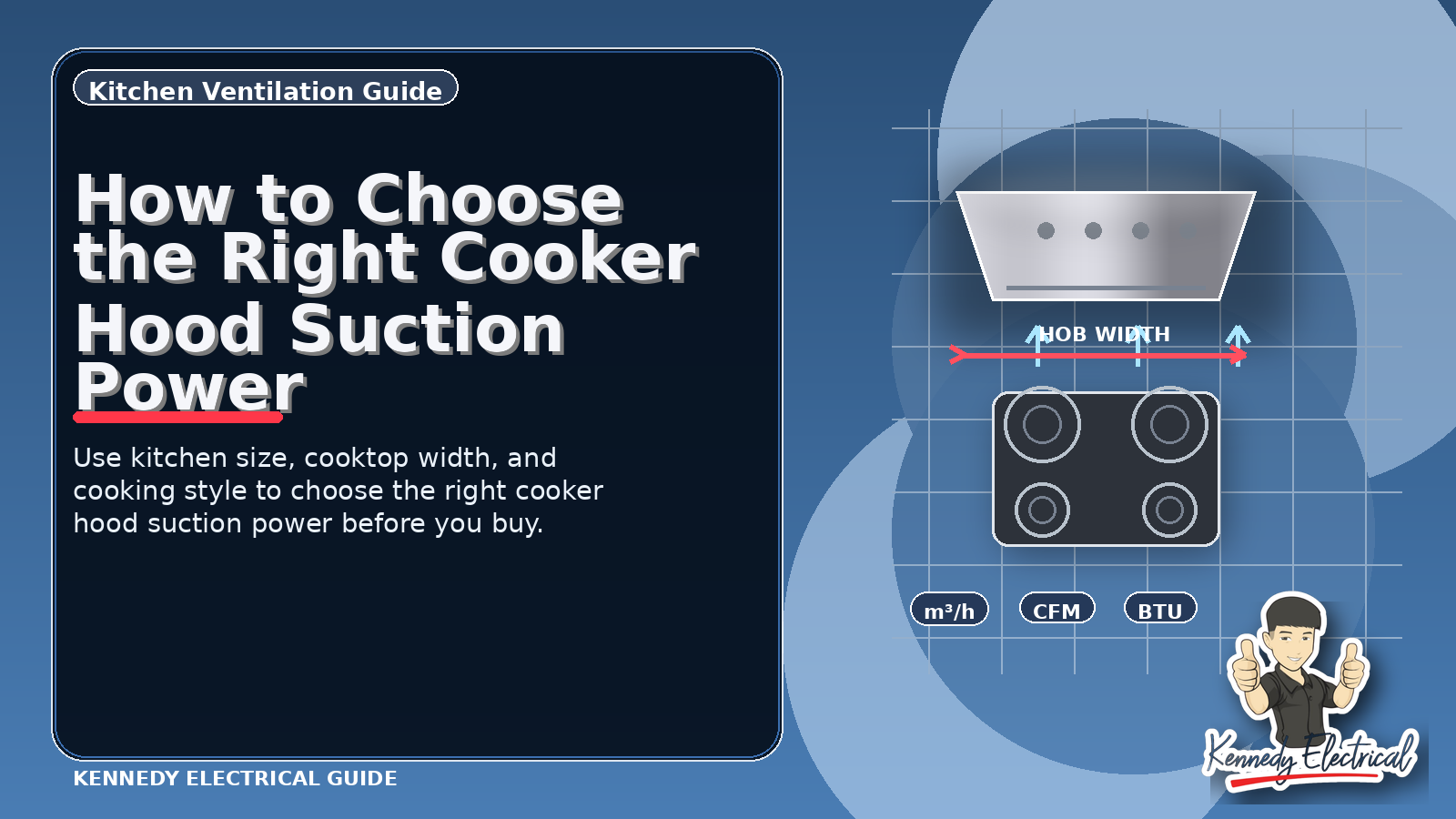
Start by calculating your kitchen volume using length × width × height. For closed kitchens, a useful baseline is to aim for about 10 to 15 air changes per hour. In practical terms, that means minimum airflow in cubic metres per hour is kitchen volume multiplied by 10 to 15. If you are checking CFM instead, divide the kitchen-volume result by 1.7 to convert roughly between m³/h and CFM. For gas cooktops, a second formula is total burner BTU divided by 100 to estimate the minimum CFM. For wall-mounted hoods, another common width-based guide is about 100 CFM per linear foot of cooktop width, while island hoods usually need more airflow than wall-mounted designs.
Cooker hood airflow guide by situation
| Feature | Minimum starting point | What usually makes more sense |
|---|---|---|
| 30 inch wall-mounted hob | Around 250 CFM or about 425 m³/h | A sensible fit for everyday boiling, simmering, and lighter cooking |
| 36 inch wall-mounted hob | Around 300 CFM or about 510 m³/h | Often a better fit for regular family cooking and moderate frying |
| 48 inch wall-mounted hob | Around 400 CFM or about 680 m³/h | Useful when the cooktop is wider or used more heavily |
| 50,000 BTU gas cooktop | About 500 CFM or about 850 m³/h | A practical minimum when high-heat gas cooking is common |
| Island hood setup | Take the wall-mounted airflow and multiply by about 1.5 | Island layouts usually need stronger suction because capture is harder |
| Heavy frying or wok cooking | Choose the higher result from your calculations | It is usually smarter to size up rather than risk weak smoke capture |
Why two kitchens of the same size can need different hoods
A small enclosed kitchen used for light boiling and reheating does not need the same suction power as a similar-size space where the household frequently fries fish, sears meat, or cooks with strong spices. Gas cooktops also create more heat load than induction or ceramic surfaces, so the ventilation requirement often rises. If you cook heavily, entertain often, or have an island hob, use the strongest applicable calculation rather than the lowest one.
Common buying mistakes to avoid
| Feature | Better habit | Mistake to avoid |
|---|---|---|
| Calculate airflow before shopping | Use kitchen volume, cooktop width, and heat output as your guide | Choosing only by appearance or promotion price |
| Match hood width to hob width | Choose a hood at least as wide as the cooktop | Buying a narrow hood for a wide hob |
| Plan for cooking style | Size up for frying, grilling, and strong odours | Assuming light-cooking requirements fit every home |
| Check installation type | Remember island hoods usually need more airflow | Using wall-hood assumptions for island installations |
| Think about noise and ducting | A stronger hood can be run at lower speed for daily cooking | Buying an underpowered unit that must run at maximum all the time |
A simple way to choose with confidence
Measure the kitchen, note whether it is closed or open, check the width and type of your hob, and think honestly about how you cook. Then compare the volume-based result, the cooktop-width result, and the gas BTU result if relevant. Use the highest realistic number as your starting point, then compare that against actual product specifications in either CFM or m³/h. This approach usually gives better results than guessing.
Frequently asked questions
Should I buy the highest suction power I can afford?
Not always. Very high airflow can be useful for heavy cooking, but the better choice is a hood that matches your kitchen size, cooktop, and cooking style.
Do gas cooktops need more suction than induction?
Often yes, because gas cooking creates more heat and combustion by-products, especially when multiple burners are used at high power.
Why do island hoods usually need more airflow?
Because they have less surrounding structure to help capture rising smoke and steam, so the hood normally needs stronger extraction to perform well.
Is a wider cooker hood better?
A hood should be at least as wide as the cooktop. That usually improves smoke capture more than choosing a narrow hood with an attractive design.
What is the safest quick rule if I am unsure?
Calculate the airflow using kitchen volume and cooktop heat, then choose the higher result rather than the lower one if your cooking is more intense than average.
Need help choosing the right cooker hood suction power?
Send us your kitchen dimensions, hob width, and whether you cook on gas or induction. Kennedy Electrical can help you narrow down a more suitable suction range before you buy.
Get cooker hood advice