
How to Choose the Right Ceiling Fan Size
Use room size, blade span, and installation clearance to choose the right ceiling fan for bedrooms, living rooms, and larger open spaces.
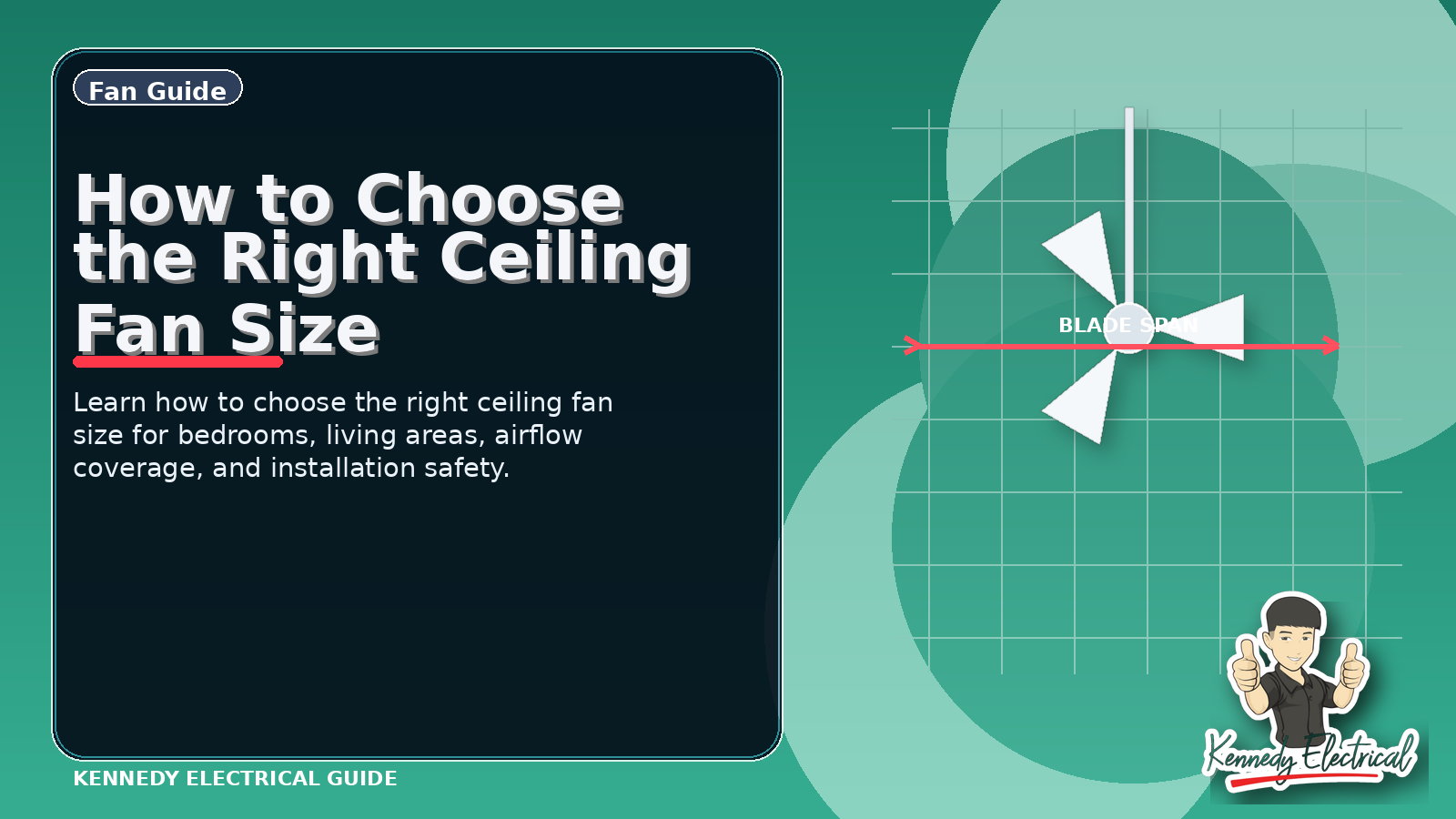
Match the fan to the room, not just the look
A ceiling fan should suit the room’s floor area, shape, and ceiling height. When a fan is too small, airflow can feel weak and uneven. When it is too large for a compact room, the fan may look oversized and still not feel well balanced if the mounting height or clearance is wrong. The best result comes from matching blade span to room area first, then checking ceiling height, wall clearance, and the real layout of the space.
A simple formula for choosing ceiling fan size
Start by measuring room length and width, then multiply them to get the floor area. After that, match the area to a suitable blade span. As a practical safety check, the fan should be installed high enough above the floor and should not sit too close to side walls, cabinets, or beams. That is why ceiling fan sizing is not only about room area. Installation clearance matters too, especially in bedrooms and compact spaces.
Ceiling fan size by room area
| Feature | Suggested blade span | Typical room type |
|---|---|---|
| Up to 7.0 m² or 75 ft² | 29 to 36 inch | Small study, compact room, very small bedroom |
| 7.1 to 13.4 m² or 76 to 144 ft² | 36 to 42 inch | Standard bedroom, home office, guest room |
| 13.5 to 20.9 m² or 144 to 225 ft² | 44 inch | Larger bedroom, dining room, medium family space |
| 21.0 to 37.2 m² or 225 to 400 ft² | 50 to 54 inch | Living room, master bedroom, wider lounge area |
| Above 37.2 m² or 400 ft² | 56 inch and above or multiple fans | Large open-plan spaces that need wider coverage |
What many buyers forget
Two rooms can have the same floor area but need different fan solutions. A square room often distributes airflow more evenly than a long narrow room. You should also look at the bed position, dining table placement, wardrobe height, beam locations, and light fittings. In some homes, the better answer is not simply a bigger fan, but a better-positioned fan or even more than one fan in a large open area.
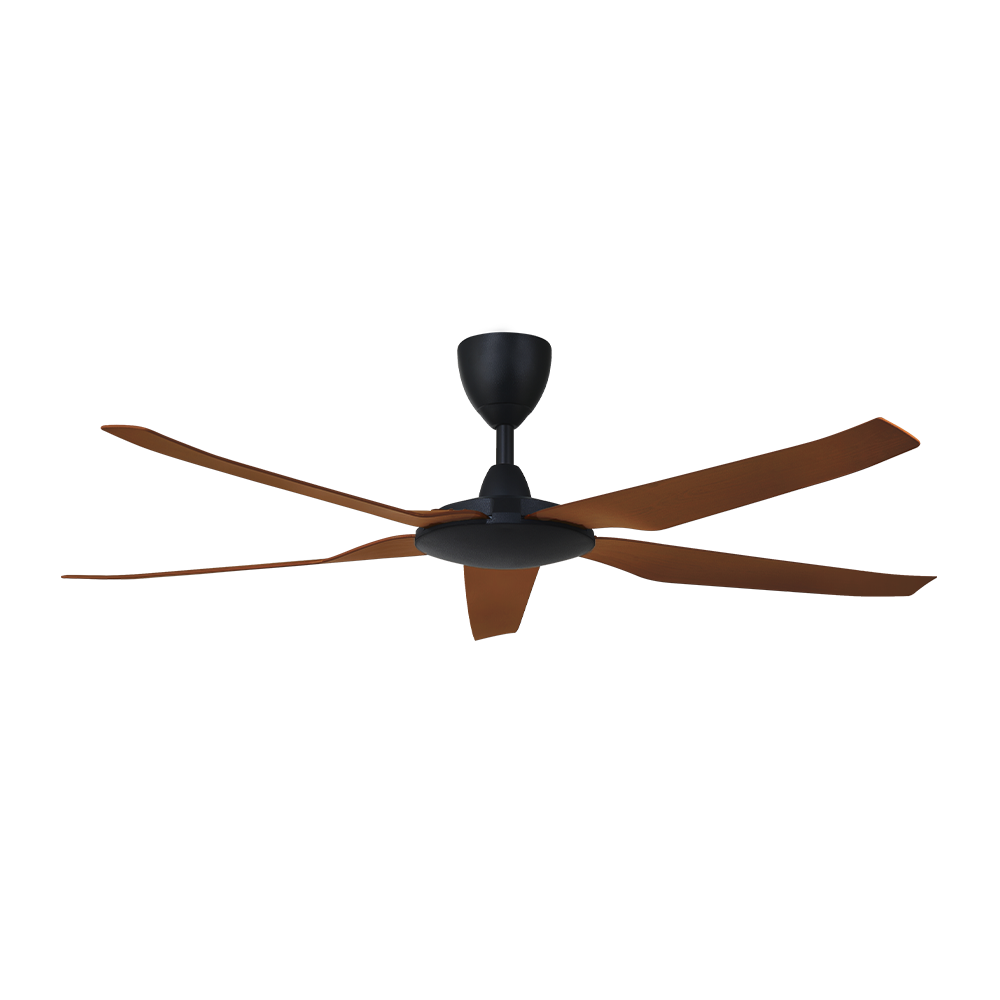
The installation checks that matter most
| Feature | What to check | Why it matters |
|---|---|---|
| Height from floor | Keep the fan high enough for safe clearance and better airflow | A fan mounted too low can be unsafe and visually uncomfortable |
| Distance from walls | Leave sensible side clearance from walls and cabinets | Tight side clearance can affect both safety and air movement |
| Low ceiling room | Choose a more suitable mounting style and avoid oversizing | A large drop in a low room can make the fan feel intrusive |
| High ceiling room | Consider the mounting height carefully so airflow reaches the occupied zone | A fan placed too high may move air but feel weaker where people sit or sleep |
| Large open-plan area | Compare one large fan against multiple fans | A single fan is not always the strongest solution for wide spaces |
A quick way to avoid the wrong fan
Measure the room area first, then check ceiling height, beam position, light fittings, and nearby walls. If the room is compact, do not assume a bigger fan is automatically better. If the room is large or open, do not assume one fan will cover everything evenly. Good fan sizing should feel balanced visually, safe to install, and strong enough for the way the room is really used.
Frequently asked questions
Can I choose ceiling fan size by room area alone?
Room area is the best starting point, but ceiling height, room shape, and installation clearance still matter.
Is a bigger ceiling fan always better?
No. A larger fan can be excellent in the right space, but in a small or low room it may feel visually heavy or awkward if clearance is poor.
What fan size is common for bedrooms?
Many standard bedrooms fall into the 36 to 42 inch or 44 inch range, depending on the room area and layout.
When should I consider more than one fan?
Large open-plan rooms often benefit from multiple fans or a more deliberate layout instead of relying on one fan to do everything.
Why does ceiling height affect fan choice?
Because the fan must be mounted at a suitable height for safety and airflow. A room that is too low or too high can change how the same fan performs.
Need help choosing the right ceiling fan size?
Tell us your room measurements, ceiling height, and whether the room is square, narrow, or open-plan. Kennedy Electrical can help you narrow down a more suitable fan size before you buy.
Get fan sizing help